Showing posts with label Morocco. Show all posts

Friday, July 13, 2012

Moroccan activists Renew Call for Freedom To eat in Public During Ramadan

With this year’s Ramadan approaching, some “irreligious” Moroccan activists have launched a Facebook page where they call for people not to fast during Ramadan. Under the name “Masayminch: We are not fasting” the group explained that that they believe that “Any Moroccan who feels the urge to drink and eat during Ramadan must be allowed to do it.”

As seen during last year’s Ramadan, this Moroccan movement has been met with harsh condemnation, not only in Morocco but also from Muslins around the world.

“What needs to be condemned and criticized instead isn’t their movement, but rather the evil engulfing Morocco from all sides, such as corruption, usury, and prostitution,” the group said in response to resistance to the “Masayminch” movement. “Isn’t Islam critical of these things, too?” they questioned.

Zineb Elghzoui, a journalist and founder of the movement, explained that the aim behind urging people not to fast has never been to provoke Moroccans. She added that Muslims are undeniably free to fast.

It appears that the movement has appealed to some Moroccans, mainly secularists and irreligious people. One example of this is blogger Kacem El Ghazali, who has contributed to the Facebook page with his ideas, among which is announcing a private place where the activists and their followers can feel free to eat and drink.

The blogger has promised to launch a two-minute video showing the act of eating and drinking during Ramadan. “The participants are purely Moroccan, ” El Ghazali added.

In 2009, Moroccan authorities arrested six non-religious activists who attempted to eat in a public park in Mohamadiya city.

|moroccoworldnews.com

Wednesday, July 11, 2012

Moroccan activists demand sex before marriage

Moroccan Justice Minister Mustafa al-Ramid lashed out at a request submitted by a group of activists asking for the legalizing of sexual relations outside marriage and called the initiative a promotion of debauchery.

“Revoking the law that criminalizes sex outside marriage is a propagation of corruption that will deal a fatal blow to Moroccan values,” Ramid said Monday in parliament, answering a question about his response to the sexual freedom initiative.

A group of Moroccan activists called a few days ago for crossing out Article 490 of the Penal Code which punishes every man and woman caught having sex outside marriage even if the couple is consenting adults. According to those activists, adults should have the freedom to engage in sexual relations as long as there is mutual consent.

The harsh criticism directed at this demand was not confined to the parliament, but extended to clerics who saw the call for sexual freedom as a grave threat to the moral and spiritual wellbeing of Moroccans.

The Union for Quranic Houses, affiliated to the Salafi school of thought, issued a statement slamming the sexual freedom initiative which, it said, “came at a time when reformers and wise men are trying to rebuild the country and fight corruption.”

Al Arabiya obtained a statement by Moroccan Salafi Front in which it accused the activists behind the initiative of violating an indisputable law in the Quran.

“They are saying that by prohibiting fornication, the Holy Quran has caused people to suffer from sexual frustration.”

The initiative, the statement added, also flagrantly contradicts the Moroccan constitution.

“According to the constitution, personal freedoms cannot violate national values and the Islamic identity of Morocco.”

The reactions of Islamists, in turn, infuriated liberals. Secular activist Abdul Hamid Amin accused Islamists of ultra-conservatism and narrow-mindedness.

“They just attack anyone who has a different opinion; they want to impose their inflexible ideologies on society,” he said.

Amin refuted allegations that activists calling for the legalization of sexual freedom aim at Westernizing society.

“On the contrary, Islamists are the ones who have always been allied with the West.”

He also disagreed with Islamists’ argument that sexual freedom is bound to increase sexually-transmitted diseases.

“This is a lie that only reveals how hypocritical society is.”

@Alarabiya

Friday, July 6, 2012

Morocco to host next Friends of Syria meeting

Morocco is to host the next Friends of Syria meeting, the over 100 nations taking part in the current encounter in Paris on Friday said in their final statement.

"The participants were pleased that Morocco is available to host the next meeting of the Friends of the Syrian People. Italy has said it is ready to host the following meeting," it said.

@AFP

Solar plane leaves Morocco for Spain

A solar-powered aircraft left the Moroccan capital on Friday for Madrid on its return journey to its home port in Switzerland.

Piloted by Bertrand Piccard, the Solar Impulse, an experimental plane which flies without fuel, took off shortly after 6am (1pm Singapore time), heading towards Barajas airport in Madrid.

The hi-tech aircraft, which has the wingspan of a jumbo jet but weighs no more than a medium-sized car, is fitted with 12,000 solar cells feeding four electric motors driving propellers.

Strong winds had grounded the Swiss-made aircraft in Morocco on Tuesday, after it arrived in Rabat a week ago following a successful flight over the Moroccan desert.


@Afp

Thursday, July 5, 2012

Morocco, Libya in Arab Nations Cup final

Morocco and Libya will be playing the final of the 2012 Arab Nations Cup on Friday July 6 at the Prince Abdullah al-Faisal Stadium in Jeddah, Saudi Arabia, after both teams qualified from the semifinals played earlier this week.

Libya knocked out host team Saudi Arabia 2-0 on Tuesday to book their place while Morocco humbled Iraq 2-1 later in the day to reach the final.

The 10th edition of the Arab Nations Cup began on June 22 with 11 nations from two confederations, including hosts and defending champions Saudi Arabia, Morocco, Egypt, Kuwait, Iraq, Bahrain, Sudan, Lebanon, Yemen, Palestine and Libya.

The eventual winner will receive $1 million (R 8m) as prize money, while the runner-up will go home with $600,000 (R 4.9m). The third placed team will get $300,000 (R 2.4m) and $200,000 (R 1.6m) will go to each of the other participating teams.

@supersport.com

Wednesday, July 4, 2012

Morocco Named "2012 Offshoring Destination of the Year"

Morocco Named 2012 Offshoring Destination of the Year\" by the European Outsourcing Association / Martyn Hart, Chairman of the European Outsourcing Association and Armand Angeli, Vice-président, EOA France, present EOA’s 2012 Offshoring Destination of the Year Award to Abderrafie Hanouf, Directeur General of MEDZ Sourcing Morocco and Larbi Bouattaf, Economic Counselor to the Embassy of Morocco to the United Kingdom.

Morocco and MEDZ Sourcing have been named "Offshoring Destination of the Year" by the European Outsourcing Association (EOA), which presented its 2012 awards on Wednesday evening at the Law Society in London. The award recognises Morocco's attractiveness as a platform for providing business, information and communications technology services to European organisations seeking cost competitive solutions for deploying their sourcing strategies. Morocco beat five other destinations shortlisted for the award including South Africa, Romania, Serbia, Slovakia, and Egypt.

The EOA judges cited Morocco's success in establishing an attractive nearshore outsourcing industry, with strong backing of testimonials from European companies, such as Dell, Logica, Deloitte, HP and Attento, who are benefitting from doing business from Morocco.

"Being chosen as EOA's Offshoring Destination of the Year is a great testament to the daily contributions of the 55,000 women and men working in Morocco's world class outsourcing centres", stated Abderrafie Hanouf, Director General of MEDZ Sourcing, operator of dedicated business parks including Casanearshore Park, Rabat Technopolis and Fès Shore, which opened officially on 20th of June. MEDZ Sourcing, was cited along with Morocco as recipient of the 2012 EOA Offshoring Destination of the Year Award.

"This is a great honour. In Europe, EOA is considered the most important association of professionals and experts in the outsourcing industry. Receiving their award validates our value proposition, which is to offer world class infrastructure, stable, competitive costs, and well-trained human resources, in combination with Morocco's geographic, cultural and linguistic proximity to Europe", continued Mr. Hanouf.

@.prnewswire.com


MOROCCAN IMAM INVESTIGATED AFTER CALLING FOR JOURNALIST'S DEATH

A Moroccan court has ordered the investigation of a controversial imam, Abdellah Nhari, for inciting hatred, reports Le Soir Echos.
In a video posted on YouTube (see below), Nhari suggests that Mokhtar Laghzioui, editor-in-chief of the Arabic newspaper Al Ahdath Al Maghribia, "must be killed" in reaction to his appearance on the new pan-Arabist news channel Al Mayadeen, where he defended individual rights for Moroccan people, especially pertaining to sexual liberties.
The imam also criticizes the Moroccan Association of Human Rights (AMDH), which has previously launched an appeal to legalize sexual relations outside of marriage. "These types of secular organizations are corrupt and financed by Europe and the West," Nhari said.
As AFP reported, the court in the Moroccan city of Oujda, declared Sunday that Nhari's speech is "likely to lead to crime, incitement of violence through preaching."
The weekly French-language Moroccan newspaper La Vie éco reported Tuesday that the Moroccan Union of Newspaper Editors (FMEJ) was "concerned and shocked" by the video, declaring that journalists should have the right to express their opinions within the framework of the law.
Mokhtar Laghzioui said: "I am relieved the authorities have taken this threat seriously. This is not about any one person. This is a real danger to individual freedom in Morocco."

@worldcrunch.com


Gay Cruise Ship Turned Away by Morocco Docks in Spain

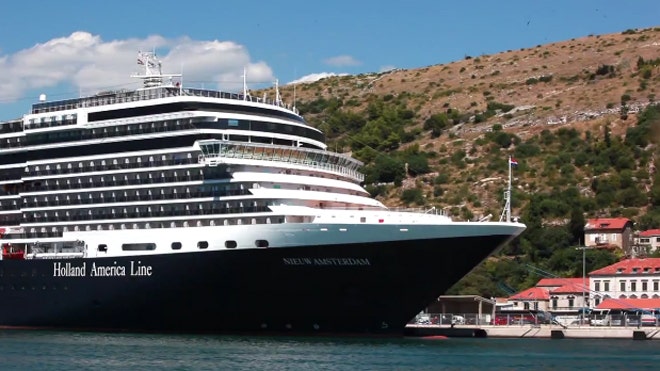
Nieuw Amsterdam.jpgThe cruise ship Nieuw Amsterdam, on its present voyage catering to a gay clientele, docked Sunday in the southern Spanish port of Malaga after Moroccan authorities prohibited it from making its scheduled port of call in Casablanca.

The vessel, carrying 1,564 passengers and 869 crew members, docked about 7:25 a.m. and was scheduled to depart from Malaga later in the day, Malaga Port Authority spokesmen told Efe.

The RSVP Vacations travel agency, which specializes in organizing tourist trips for gay and lesbian customers, said Saturday in a letter to its clients that its agent in the port of Casablanca had reported that "the authorities have cancelled the scheduled July 1 visit despite having previously confirmed it."

The agency said that they considered this to be "disappointing news" and added that the decision was made after the "visit of a gay cruise ship" turned into "a public and potentially controversial matter."

Despite the cruise ship's claims, Morocco's Tourism Minister Lahcen Haddad denied that the ship was somehow prevented from docking.

"We don't ban cruise ships here and we never ask our visitors about their sexual preferences," he told Reuters.

The minister also reiterated that the cruise line can dock in Morocco for future trips.

In Morocco the same-sex relationships are unlawful and punishable to up to three years in jail. Their penal code also bans sex outside marriage, and buying alcohol. The ship, which belongs to the U.S. company Holland America Line, had scheduled a program for its stay in Casablanca that included a visit to the Hassan II Mosque and to several souks - or traditional marketplaces - in the city.

After the stop in Casablanca, which was supposed to last for about 12 hours, the cruise ship was due to sail to Cadiz, also in southern Spain, and then to continue on to Ibiza in the Balearic Islands, then to the eastern Spanish city of Valencia and finally to end its journey in Barcelona.

Organizers emphasized the "historic welcoming tolerance for gay tourists" in Morocco, despite the fact that the religion - Islam - and the laws of the North African country punish homosexuality.

@foxnews.com

Saturday, May 26, 2012

Morocco hosts musicians — and imprisons its own

Image: Lenny Kravitz performs Morocco's glittering Mawazine international music festival wraps up this weekend with performances by Mariah Carey and Lenny Kravitz, after nine days of showcasing the North African kingdom's cool factor — even as dissident Moroccan artists are imprisoned for their anti-establishment sentiments.

The 11-year-old "Rhythms of the World" festival in the capital Rabat has always highlighted Morocco's contradictions as the country spends millions to lure top world artists to perform at generally free concerts, while much the country remains mired in poverty.

In past years the festival has been attacked by Islamists for inviting gay performer Elton John in 2010 and by activists for the cost of attracting Shakira and other high profile acts in 2011, but this year the theme of protest is freedom of expression. Just a week before the festival began, Human Rights Watch slammed Morocco for sentencing a rapper to a year in prison for lyrics deemed insulting to police — a common theme in rap music elsewhere in the world.

"Morocco hosts one famous international music festival after another each spring, but meanwhile it imprisons one of its own singers solely because of lyrics and images that displease the authorities," Sarah Leah Whitson, Mideast director of the group said in a statement. "Morocco should be known as a haven for world music, not for locking up singers with a political message."

Image: Moroccan rapper Mouad BelghouatMoroccan rapper Mouad Belghouat, known as El-Haqed, or "The Enraged" was convicted on May 11 of "showing contempt" to public servants with his song "Dogs of the State" about police corruption. He is known for his political activism and vitriolic songs attacking social injustice, the monarchy and corruption.

A week later, dissident poet Youssef Belkhdim was convicted of attacking police — a charge he denies — at a sit-in he organized in support of Belghouat and sentenced to two years in prison.

The two men belonged to Morocco's pro-democracy February 20 movement that last year brought tens of thousands into the streets protesting corruption and calling for political reform.

The extravagant sums spent on the Mawazine have been a mainstay of the movement's slogans. Festival organizers maintain that the Mawazine's estimated $7 million price tag is worth it because it improves Morocco's image abroad and gives people at home access to music from around the world. The festival is funded largely by corporate sponsors with strong ties to the state.

"It's a celebration. It's a celebration of the city, a celebration of Morocco and it reflects a bit Morocco's good life to the world," said program director Mahmoud Lemseffer. "It is a vehicle to present the image of our country, of its hospitality and tolerance."

Tens of thousands attend each of the festival's eight venues which present Arabic music, Moroccan music, music from sub-Saharan Africa as well as international acts, which this year included Evanescence, the Scorpions, Gloria Gaynor, Nigel Kennedy and Jimmy Cliff.

Most of the acts have free sections open to the public and on Tuesday, families strolling along Rabat's Bouregreg river stopped to listen to Beninian songstress Angelique Kidjo belt out classics from South African diva Mariam Makebe and talk about the struggle against apartheid.

But for critics, there is irony in punishing artists at home while hosting international ones known for their support of freedom of expression. Lenny Kravitz, for instance, has striven in song after song to confront America's tortured attitude about race.

"I think that people should really say what they feel — everybody has the right to speak their mind, you see how things change in places where people were once condemned," said Kravitz at a press conference Thursday when asked about politics in music. "When I was in Brazil a couple of years ago, I was talking with (musician and activist) Caetano Veloso who dealt with that same thing, who did jail time — and now he has made a difference."

Salif Traore of the Ivorian band Magic System said that for African artists, speaking truth to power and freedom of expression is what their music is all about. "We in Africa, we say that artists, musicians and singers are the eyes, ears, and mouths of the people," he told The Associated Press, when asked about his views on the El-Haqed case.

Rachid el-Belghiti, who heads a national anti-Mawazine campaign, also contests the government's assertion that it's supporting culture in Morocco with this festival, countering that it's really just about making the country look good abroad. He said the Mawazine, which is run by a close confidant of King Mohammed VI, eats up the lion's share of corporate sponsorship so that little is left for other festivals around the country.

As millions are being spent to lure in big name acts, local theaters and dance schools around the country are closing down because of a lack of funding. "A country which puts its artists in prison simply for expressing themselves with their voice or their instruments cannot pretend to support culture," he said. "That's impossible."

///AP

Monday, April 30, 2012

Selling Ceuta & Melilla

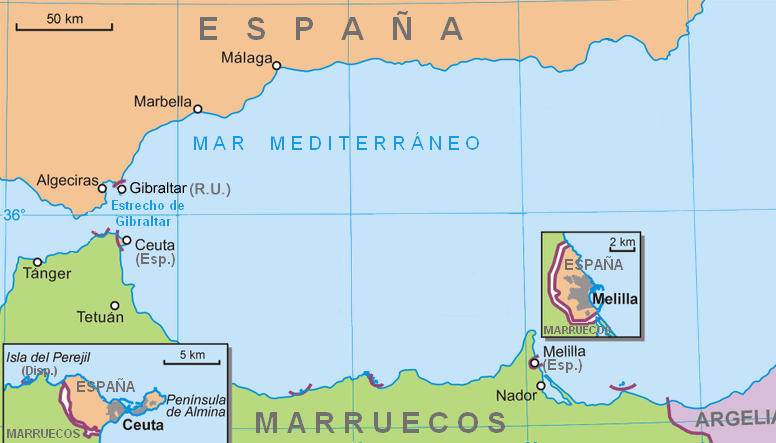
Selling Ceuta and Melilla, an article recently published in a spanish newspaper “Galicia confidencial” by the spanish journalist Horacio Vixandge in which he suggests to sell Ceuta and Melilla to Morocco claiming that Spain is in desperate need for money to overcome its social and economic problems and such a deal can be the way out.

Ceuta and Melilla came under Spanish control some 500 years ago, and even after Morocco’s independence they remained as Spanish enclaves and Madrid claims they are integral parts of Spain while Rabat continue to claim sovereignty and considers the Spanish presence anachronistic.

Vixandge says “what could be better as a business: selling something to someone which already belongs to him”. He also calls Morocco to accept the deal saying that if David Cameron offers to sell Gibraltar, the Spanish government will accept and pay all of its wealth: money, art galleries…

http://www.galiciaconfidencial.com/nova/10307.html


@ lailab.wordpress.com

Tuesday, April 10, 2012

Morocco’s Islamist-led government raises taxes on alcohol, cigars

Morocco's Islamist-led government had decided to increase tax on liquor sales in a step to increase state revenue. (Staff illustration)Although alcohol is forbidden (haram) in Islam, Morocco’s moderate Islamist government appears to have found a halal route that allows them to profit from its sale.

Caught between soaring prices, low economic growth forecasts, and a harsh drought, the Islamist-led government had decided to increase tax on liquor sales in a step to increase state revenue.

The liquor tax has been raised from 10,500 ($1,230) dirham per 100 liters (26.4 gallons) to 15,000 ($1,760) dirhams per 100 liters.
The tax on beer has been raised from 550 ($64) to 900 ($105) per 100 liter while the sales tax on cigars has been raised by 10 percent to 35 percent.

When it was in the opposition, the moderate Islamist Justice and Development Party (PJD) often demanded an increase on the alcohol sales tax, which unlike the tax on food products, has remained the same in 33 years.

Moroccan economist Omar al-Kattani said the PJD’s move will help the government find solutions to some budgetary problems without significantly affecting producers and distributors of alcohol products who made major profits last year.

Kattani said the move is also likely to reduce the consumption of alcohol amongst low-income people.
Meanwhile, political analyst Abd el-Ali Majdoub said by this move the government had targeted the “alcohol lobbyists who have benefitted from decades-old privileges ... to make money at the expense of the people’s health.”

In 1967 King Hasan II, also known as the commander of the faithful, delegated his powers to an advisor in the royal court to sign a decree that authorizes the sale of alcohol to non-Muslims.
The king apparently did not want to be seen by his Muslims-majority people as the one who authorized the sale of something forbidden in Islam.

Although alcohol in Morocco is not supposed to be sold to Muslims, it is easily available in stores and supermarkets.

 @Alarabiya.net

Friday, March 30, 2012

Swiss solar plane to attempt 48-hour flight to Morocco

The Swiss sun-powered aircraft Solar Impulse will attempt to fly from Switzerland to Morocco in coming weeks, in its longest flight to date, organisers said Wednesday.

 "After its inaugural flight to Paris and Brussels in 2011, Bertrand Piccard and Andre Borschberg's solar airplane will attempt, for the first time ever, to fly over 2,500 km (1,550 miles) without using a drop of fuel, finally landing in Morocco," said the project in a statement. Piccard and Borschberg will take turns to pilot the plane during the 48-hour journey, with a stopover near Madrid expected for the swap.

 The trip, expected for May or June, would be a rehearsal in the run-up to the plane's round-the-world flight planned for 2014. "Flying as far as this, powered only by solar energy will be excellent training for the round-the-world trip," said Borschberg, co-founder and chief executive of Solar Impulse. The high-tech aircraft, which has the wingspan of a large airliner but weighs no more than a saloon car, made history in July 2010 as the first manned plane to fly around the clock on the sun's energy.

It holds a record for the longest flight by a manned solar-powered aeroplane after staying aloft for 26 hours, 10 minutes and 19 seconds above Switzerland, also setting a record for altitude by flying at 9,235 metres (30,298 feet). It has since flown several times, notably between the Geneva and Zurich airports, as well as to Paris and Brussels.

 @AFP

Graft, corruption found in Morocco public sector

An audit court has found evidence of graft, corruption and insider trading in Morocco's state-owned firms and entities, putting to the test a government promise to end such practices.

The Supreme Court of Audit's latest probe revealed that bourse watchdog CDVM had not properly investigated cases of insider trading involving five individuals that netted them gains of close to $30 million between July, 2006 and January 2007.

The report, published late on Wednesday on the official gazette, also revealed that foreign exchange regulator Office des Changes had imposed what the report found were lenient fines on unauthorised outflows of foreign currencies from the North African country, whose dirham currency is not convertible.

It also said mismanagement at some state-run firms, including flag carrier Royal Air Maroc and the National Ports Authority, had reached such a scale that the state was losing tens of millions of dirhams in undue benefits paid to executives and the non-collection of payments.

A copy of the report was submitted to King Mohammed, the gazette said, without mentioning the date.

(Full text of the report in French with comments of audited firms and administrations: here) Morocco has not had a revolution of the kind seen in Egypt, Libya or Tunisia. King Mohammed is still firmly in charge after he offered to trim his powers and allowed moderate Islamists to lead the government after their Justice and Development Party (PJD) won a November election.

The report is the court's first since the king, to sidestep mass protests last year, floated reforms that should give parliament greater oversight in the management of public affairs and make the judiciary more independent.

Communication Minister Mustafa El-Khalfi on Thursday told reporters the government is determined to implement the recommendations of court's report.

"This government is under greater pressure than predecessors to follow the (Audit Court) report with actions," said Ali Anouzla, a political analyst and editor of the independent news portal Lakome.com.

"PJD raised the slogan of good governance and fighting graft and now leads the government and controls the justice ministry. It should therefore be able to ensure that this report does not end up as ink on paper, as happened with previous reports by the court," he added.

PJD won the election on the back of promises to cut corruption and tackle inequalities. Party officials said they can add 2 percent to annual economic growth by fighting corruption.

Morocco ranks 80th in Transparency International's ranking of 178 countries by their perceived level of corruption, below Tunisia and Saudi Arabia and above some European countries such as Bulgaria and Serbia.

@Reuters

Outspoken Morocco rapper charged over "insulting" song

A Moroccan rapper was charged on Friday with insulting public authorities in a song that was posted on YouTube, at the start of a trial criticised by his supporters as a new attempt to muzzle an outspoken critic of the monarchy.

The court, in Casablanca, adjourned the trial of Mouad Belrhouat, known as El-Haqed or "The Sullen One", to April 4 and refused him bail, his lawyer Hatim Bekkar said.

It is less than three months since El-Haqed was sentenced to four months in prison for assault after a brawl with a monarchist, but released at once because he had spent that long in detention awaiting trial.

Bekkar said his client had been arrested by plainclothes police officers on Thursday without a warrant.

The state-run MAP news agency said he was arrested for "singing a song defamatory to a public authority" - which it did not name - and for posting images "detrimental to public servants".

El-Haqed was the voice of a movement that organised mass protests last year to push for a constitutional monarchy, an independent judiciary and less corruption. His lyrics have angered many monarchists but struck a chord with Moroccans disenchanted with the lack of jobs and widespread corruption.

The authorities, trying to prevent popular revolts like those in Egypt and Tunisia, introduced reforms in July which were meant to make the judiciary constitutionally independent and to guarantee greater respect for public freedoms.

But the courts still have a reputation for taking their cue from the authorities. El-Haqed's brother, Abderrahim Belrhouat, said Friday's trial "shows how nothing has changed in Morocco".

Bekkar said the trial was political and that El-Haqed faced up to three years' jail if found guilty. "It seems the police are now the plaintiff ... The prosecution has ordered his detention as if he represented a danger to the community".

The court questioned El-Haqed about a video of his song "Kilab Addawla" - "Dogs of the State" in English - which was posted on Youtube in January with a photo montage critical of the police, the government and the monarchy.

"It was El-Haqed's song, yes, but he had nothing to do with the video or the photo montage on it," activist Maria Karim said. The video has had some 126,000 hits since it was posted.

It showed a member of the riot police with a donkey's head tugging at a protester's clothes, and a picture of servants bowing before the king in one of his palaces with a caption reading "Collective bowing, but not before God".

Abbdelilah Benabdeslam, from Morocco's main human rights group AMDH, said El-Haqed's arrest comes at a time of "growing constraints on freedom of speech and opinion in Morocco".

"El-Haqed uses songs to express his views about ... Morocco. Democracies allow their citizens to express their views without risking arrest," he said.

On Tuesday, an appeal court near Rabat sentenced 18-year-old Walid Bahomane to 18 months in prison after a cartoon of the king - originally published by a French newspaper - was posted on his Facebook page.

A 24-year-old activist was jailed for three years in February for slandering the king in a video on Youtube.

Many people have been jailed this year for taking part in protests over unemployment, corruption and poverty, and many Moroccans are growing impatient as they wait for action to put the proposed reforms into effect.

"One does not have to go far back to discover how the police force often commits violations in handling peaceful protests," said Benabdeslam, who cited a recent report by 18 local rights groups that slammed the police for excessive use of violence in handling protests in northern Morocco.

Communications Minister Mustafa el-Khalfi, who is also the government spokesman, could not be reached for comment. The government says it is fully committed to respect for human rights. @Reuters

Wednesday, March 21, 2012

Spain and Morocco compete for oil search in Canary Islands

Spain and Morocco are competing in the search for oil in the deep-sea area of Canary Islands, near the sea border with Morocco.

This can be inferred from what the Industry, Tourism and Trade Minister José Manuel Soria has stated today during a radio interview at Radio Onda Zero. Soria confirmed that Morocco "is already carrying out surveys" in the area, which is allegedly located "on the border of the imaginary line ideally separating the Kingdom of Morocco from the Kingdom of Spain". According to the Minister, if there actually is oil, "there will be two options: either Morocco extracts it or both Morocco and Spain do, each on its side of the line". Soria ensured that the chance of finding oil "is good", totalling 20%.

The Minister also underlined that the potential production of any oil fields totals 140,000 barrels of raw oil in 20 years, the equivalent of 10% of daily consumption in Spain. According to the Minister, overall the Canary Island oil would allow Spain to save EUR 28 bln on its energy invoice. With regard to opposition by the Canary Islands'local authorities and environmental protection groups, who fear that the environment and tourism (the archipelago's main industry) would suffer irreversible damage, the Industry Minister maintained that the debate is "unnecessary and groundless", because surveys will be carried out at a 61-km distance from the coast "nearly in the middle of the ocean".

@ansamed.info

Tuesday, March 20, 2012

Morocco's Roman ruins: Stunning, with few tourists

Visitors to Morocco usually head straight for the beaches or plunge into the winding alleys of exotic medieval markets, but this rich North African country also has a wealth of ruins from its days as a Roman colony.

Few visit Morocco's handful of 2,000-year-old sites, but they are well worth the side trip, not least because the ancient city planners had a knack for picking the most stunning locations for their towns. In addition, the lack of tourists gives them a haunted undiscovered feel.

The best sites — Volubilis and Lixus — are easy two-hour drives from the capital Rabat, and a third site, Sala Colonia, is in Rabat.

And while they may lack the ostentatious grandeur of Turkey's Ephesus or Tunisia's Carthage, Morocco's overgrown, often ill-kept ruins have their own charms, in part because they are so often overlooked. The only sound to break the silence during a recent visit to Volubilus, for example, was a donkey rustling through overgrown bushes to crop at weeds around a mosaic depicting the 12 labors of Hercules.

VOLUBILIS

The jewel in the crown of Morocco's Roman ruins is certainly Volubilis, located at the foot of the Atlas mountains in a sweeping valley filled with olive and almond trees.

This city of 20,000 was the westernmost extremity of an empire that once stretched to the gates of Persia. The sprawling floor plans of its buildings and brilliant floor mosaics suggest great wealth.

The site is dominated by the remains of the grand public buildings around the forum, with the impressive arches of the Basilica courthouse arrayed in front of pillars of the temple to the god Jupiter — now topped by bushy stork nests. Every old ruin in Morocco appears to host its own of population of the large black and white birds, which soar over the sites or preen in their nests as tourists snap away with cameras.

When they start clacking their beaks in chorus, it sends an eerie chattering noise across the ancient stones.

That old Roman standby of a triumphal arch, in this case commemorating Emperor Caracalla, who bestowed citizenship on the empire's inhabitants in A.D. 212, marks the beginning of the city's main street.

Lined with shops, the Decumanus Maximus was the most desirable address in town. Nearby expansive villas still boast the colorful floor mosaics that have made this ruin famous.

For those used to seeing such mosaics painstakingly wrought out of tiny colored stones in museums, it is a surprise to see them set in the ground marked off by little more than a moldy barrier of rope.

In one massive floor mosaic, Orpheus charms wild animals with his harp while in another room, dolphins frolic through the waves of what must have been the bathroom.

Greek myths predominate as subject matter. In one villa, licentious nymphs carry off the handsome Hylas, son of Hercules, who looks shocked.

In another, the hunter Acteon surprises the goddess Diana bathing — an unfortunate story that ends with Diana turning the hapless interloper into a stag to be torn apart by his own dogs.

Depictions of Greek and Roman gods of wine, Dionysius and Bacchus, are everywhere, suggesting the inhabitants liked their grape. Nearby Meknes remains the center of Morocco's wine production.

Other mosaics depict geometric patterns that are repeated in the Berber rugs that can be bought in nearby mountain villages.

The quality of work attests to the wealth of the town, which came from olive orchards and wheat fields that fill the valley around the ruin.

The city's other main export was wild animals, including lions, jaguars and bears that went to fight and die in Rome's colosseum. Within just 200 years, the beast population in the area was devastated and indigenous species like the Barbary Lion and Atlas Bear had all but ceased to exist.

Volubilis was once the capital of Berber king Juba II, who was raised in Rome and went on to marry the daughter of doomed lovers, Anthony and Cleopatra. After his successor Ptolemy was murdered by the unstable Emperor Caligula for the crime of wearing too beautiful a robe, Morocco was made into the Roman province of Mauretania Tingitania in A.D. 40.

The site continued to be inhabited even after the embattled empire pulled out its legions 240 years later, and was reported to still be speaking Latin when the Arabs arrived in the eighth century.

It is said, the ruins were actually in good shape until the 18th century when Sultan Moulay Ismail pulled them down to use for the monumental palace he was building in nearby Meknes.

The easy accessibility to these mosaics, however, has taken its toll and the colors have faded from daily exposure to the elements. The site also suffers from lack of upkeep. Plants and grasses run riot through the streets and rooms, giving it an undiscovered feeling.

SALA COLONIA

The grounds are a little better maintained in the ruins of Sala Colonia, conveniently located in the capital Rabat, where the remains of a Roman settlement were incorporated into a medieval necropolis called the Chellah.

It is the most easily visited of Morocco's Roman sites. With its accompanying botanical gardens and Islamic-era ruins, it's a popular spot for local families on weekends.

Built on a trading post used by the Phoenicians, Sala sits on a hill with a panoramic view of the Bouregreg river flowing into the Atlantic and is now surrounded by a crenelated medieval wall with imposing towers.

The ruins are not quite as extensive as Volubilis and there are no labels, so it takes a bit of imagination to reanimate the fallen pillars and fragments of carved stone littering the paved floor of the forum.

A statue of a figure in a toga, most likely some elder statesman of this port city, hints at the lost beauty of the main square.

LIXUS

Farther north along the coast is Lixus, one of Morocco's most intriguing Roman sites for its almost total obscurity and lack of visitors. Is also the legendary site of the Garden of Hesperides, from which Hercules had to steal the golden apples for one of his trials.

The once thriving port city sits on a hill over the looping folds of the winding Loukkos river.

There is no fee to enter the grounds or even a parking lot to hold a tour bus, but wandering up the hill with no tourists in sight, it's easy to feel like you are the first person to discover the tumbled blocks of a city that fell long ago.

Around the base of the hill are a series of deep pits and arches from the factories that made its principal export to Rome: a paste made of fermented fish entrails known as garum that was prized as condiment throughout the empire, but has since been (thankfully) dropped from Italian cuisine.

Since making garum was a smelly business and the factories were always on the edge town, you have to walk up the hill to find the city proper.

Halfway up the half hour trip to the summit, the path opens up to a partially restored amphitheater with a stunning view of the flat valley below. The deep pit at the base of the rows of seats suggests that animal and gladiator combats took place here as well theater productions.

The summit is covered with a maze of walls and buildings, some at least 6 feet high (2 meters) and give a sense of walking through the narrow alleys of an old stone town.

There are also the walls of a church built in the settlement's final years and a clear view across the bay to the town of Larache two and a half miles (four kilometers) away. The former Spanish colony still sports charming colonial buildings and a beautiful, labyrinthine old city that is worth a visit on its own — not to mention the nearby beaches.

The only time the site sees many visitors is on weekends when local youths ride their mo-peds out and climb the hill to enjoy the view. @cbsnews.com

Monday, March 19, 2012

King of Morocco Knights Chabad Rabbi

King of Morocco Knights Chabad RabbiChabad rabbi, Rabbi Raphael Benchimol of the Manhattan Sephardic Congregation was honored with the Knight of the Order of the Throne from Mohammed VI King of Morocco, in New York on March 11.

Yet today only 1% of the estimated 600,000 Moroccan Jews worldwide live in the North African country, with the overwhelming majority immigrating to Israel and other western countries.

Rabbi Benchimol, who was born in Rabat, Morocco and studied in Chabad Yeshivas both in Rabat and the United States, dedicated himself to servicing the North African country’s Jewish community and shepherding its members abroad.

He is known for his vigorous Torah studies and outreach programs, and is the founder of the Aleph Learning Center, which is devoted to teaching Jewish studies, including Talmud, Kabbalah and Hassidic philosophy to Jews of all ages and backgrounds.

Serge Berdugo, president of the Jewish Community of Morocco, represented the King of Morocco in awarding Rabbi Benchimol at the well-attended ceremony, and was joined by dignitaries Moroccan Ambassador to the United States, Rachad Bouhal; Chairman of the American Sephardi Federation, David Dangoor and Special Advisor to the Secretary General to the United Nations of Yemen, Jamal Benomar.

In his speech Berdugo stated, “Moroccan Jews, even after leaving their country, retain attachment to and love for Morocco, as confirmed by the beautiful words of the late Yitzchak Rabin: 'Moroccan Jews are the only Jews that never renounce their country, nor were they rejected by their country.’ "

In response, Rabbi Benchimol, on behalf of the American Sephardi Federation, presented a magnificent traditional silver crown of a Torah scroll as a tribute to “a remarkable country,” the Kingdom of Morocco.

“The king recognizes the merits of Moroccan Jews, wherever they settled,” he said, “by honoring them with the highest medals of his kingdom. This special ceremony of recognition and of mutual respect between two peoples, Jewish and Muslim, is just another testament to how unique and distinct Morocco is, and how exceptional the royal family is. Although we left Morocco, Morocco never leaves us. It is deeply engraved in our hearts. "


@lubavitch.com

Thursday, March 15, 2012

#Morocco: Rape-Marriage Law Will Be Amended #RipAmina

Le Maroc choqué après le suicide d'une adolescente forcée d'épouser son violeurMorocco on Thursday said it would amend a law allowing rapists to marry their underage female victims after the suicide of a teenage girl raised doubts about the effectiveness of reforms to women's rights in the country.

Sixteen-year-old Amina El-Filali killed herself last week near the northern city of Larache by swallowing rat poison after a six-month forced marriage to the man who raped her.

Local human rights activists say the law violates women's rights and was created to avoid damage to the reputation of the victim's family.

"This is a painful incident... This is an issue we can't afford to ignore," said Communication Minister and government spokesman Mustafa el-Khalfi.

"She was raped twice - once by the rapist and the second time by marrying him... We plan harsher sentences against rapists and we will launch... a debate about law 475 to reform it," he told reporters.

Rape victims in Morocco carry a stigma of shame and dishonour. They are often suspected by police and judges of consent, and little social assistance is given to help them rebuild their lives.

Convicted rapists face five to 10 years in prison, and up to 20 years when the victim is underage.

At the westernmost boundary of the Muslim world, and only a stone throw's away from Europe, Moroccan women find themselves enjoying more freedoms. A family law reformed in 2004 won the North African country praise from the West for giving Moroccan women more rights than many Arab states.

But that reform, which led to the creation of matrimonial courts, has been dogged by Morocco's conservative and predominantly male judges, and by a failure to adopt laws to ensure better protection to women from physical abuse.

While it allowed women to seek divorce, made procedures for polygamy complicated and raised the minimum marriage age for women to 18 from 15, it enabled judges to rely on their own discretion in allowing minors to be married.

One out of eight rural Moroccan women aged between 15-19 was married in 2010 while the rate stood at one out of seven in 1994, official data shows.

@Reuters

Forbes Magazine List of Billionaires Includes Three Moroccan Businessmen

Every year, US News and World Report releases its ranking of the best colleges and universities in the United States. For parents and high school students, the report is a useful guide in making the crucial decision of where to obtain the best secondary education. There is another famous ranking in the United States. Forbes Magazine, much to the chagrin of those of us who struggle for a living, releases its list of the world’s wealthiest individuals. For some reason, the public is always fascinated by this list and is eager to learn the names and backgrounds of multi-billionaires. With a few exceptions, the majority of the ultra-rich are businessmen from Western developed nations.

 For the past two years, Mexican businessman Carlos Slim Helu has held the top spot with an estimated fortune of $69 billion dollars. Mr. Slim is chairman of the Mexican telecom company, Temex. Bill Gates, a Harvard drop out who founded and chairs Microsoft, ranks second with $61 billion dollars. Prince Alwaleed Bin Talal Alsaud‘s fortune is close to $18 billion dollars. He earns most of his wealth from investing in Saudi and international corporations and multinationals, including Citigroup and the Four Seasons hotel chain. Although underrepresented, women are also on the list. German businesswoman, Susanne Klatten, heir to the automobile giant BMW and a trained economist, has a net worth of $13 billion dollars.

With the economic emergence of China, India, Brazil and Russia, non-Western nations have a greater number of billionaires. For instance, Moroccan real estate businessman, Miloud Chaabi, is ranked 401st with a fortune worth $2.9 billion dollars. His company invested initially in housing before expanding to hotels, supermarkets and renewable energy. Othmane Benjelloun, a seasoned businessman in the insurance and banking sectors (RMA Watanyia, BMCE) has a net worth of $2.3 billion dollars. Moroccan entrepreneur Anas Sefrioui has a net worth $1.6 billion dollars. According to Forbes, his opportunity came when he won a contract to build a chunk of government-subsidized housing under the patronage of Morocco’s late King Hassan II.

It is worth noting that the three Moroccan billionaires are involved in the real estate sector. This highly profitable business benefits from Morocco’s growing urban population and structural reforms (such as construction of high ways). Nevertheless, real estate business does not generate a satisfactory number of job opportunities liable to alleviate the problem of unemployment in Morocco. Moreover, Morocco’s wealthy businessmen seldom engage in large scale philanthropic ventures like their counterparts in other countries. Since 2000, Bill Gates has donated $29 billion dollars to various charities. He is also committed to AIDS prevention programs, as well as other diseases prevalent in third World countries.

Morocco’s billionaires are best suited to fund sustainable development projects that could benefit large segments of Moroccan society. Let’s hope that they not only emulate their Western counterparts in their ability to generate wealth. It behooves them, for the sake of humanity and their personal legacies, to dedicate a portion of their massive wealth to programs that alleviate the poverty of millions of their compatriots.

@Loubna Flah/ Morocco World News

King Mohammed VI of Morocco will visit South Korea

King Mohammed VI will make an official visit to South Korea in the coming weeks, as part of a tour that will take him in several Asian countries.

The Moroccan sovereign will meet with several Korean officials in order to develop the cooperation relations between Morocco and South Korea.

Share

Twitter Delicious Facebook Digg Stumbleupon Favorites More